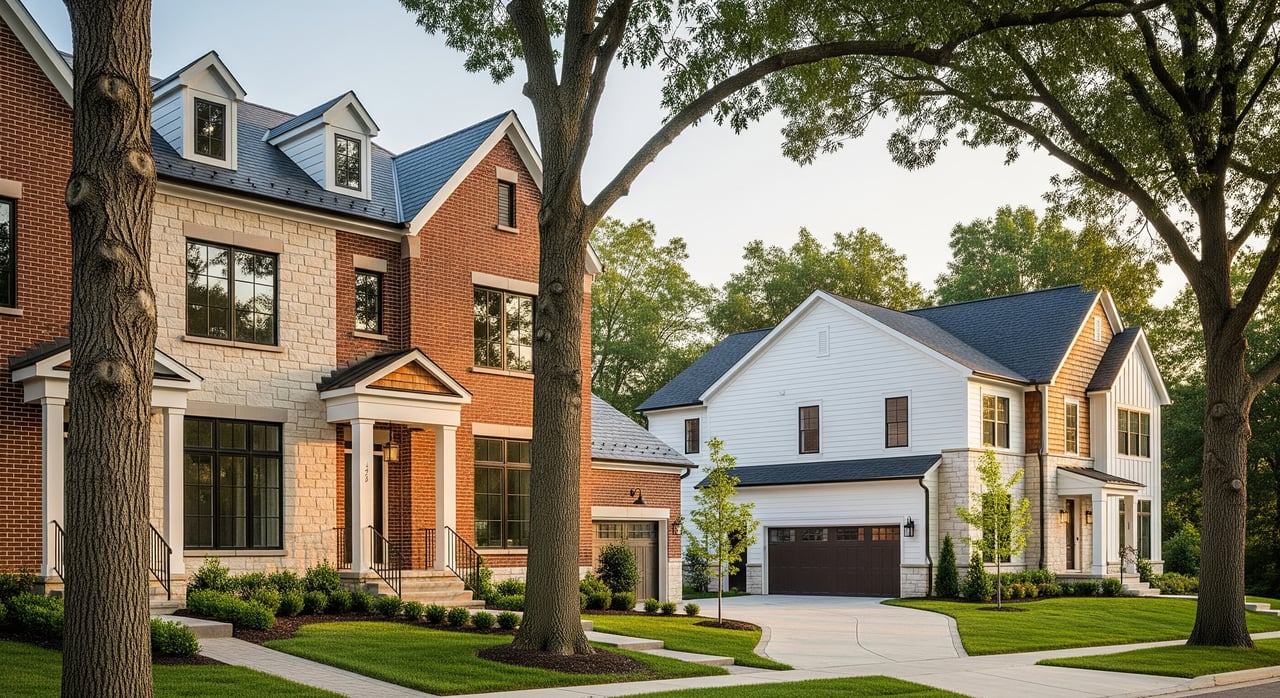
You see a townhome with tidy HOA dues next to a single-family with a bigger yard, and it feels like an apples-to-oranges choice. The list price is only part of the story. What matters is your true monthly outlay and the periodic risks you take on as an owner. This guide breaks down each cost in Westfield and gives you a simple way to compare. Let’s dive in.
What drives true cost in Westfield
Your monthly cost of ownership includes property taxes, HOA dues, homeowners insurance, routine maintenance and repairs, and utilities. If the property is in an HOA, you also need to evaluate reserve health and the risk of special assessments. The mix looks different for townhomes and single-family homes. Townhomes often trade higher HOA dues for lower insurance and exterior maintenance, while single-family homes offer more control but put you on the hook for most upkeep.
HOA dues: inclusions and ranges
Townhome communities in the Midwest commonly charge about $150 to $400 or more per month, depending on amenities and what the HOA maintains. In Westfield, many newer subdivisions for single-family homes also have an HOA, but dues are often lower (about $25 to $200 per month) and focus on common areas rather than exterior upkeep. Higher dues are not automatically bad. If they cover exterior maintenance, snow removal, landscaping, parts of your insurance, or utilities, your total monthly cost can still be competitive.
For best practices on reserves and HOA budgeting, review guidance from the Community Associations Institute.
Questions to ask the HOA or listing agent:
- What do dues include exactly (exterior, roof, landscaping, snow removal, water, trash, reserves)?
- How often do dues increase, and by how much?
- Any recent or pending special assessments? Why?
- Is there a current reserve study and what is the reserve balance?
Insurance: HO-3 vs HO-6 in practice
Townhome and condo owners typically carry an HO-6 policy that covers the interior, personal property, and liability. The exterior and structure are usually covered under the HOA’s master policy, subject to the policy’s “bare walls-in” or “all-in” terms. Single-family owners carry HO-3 or HO-5 coverage that insures the full dwelling and attached structures, which generally costs more than an HO-6 for similar living space.
To understand coverage types and price drivers, see the Insurance Information Institute. Before you bind, confirm master policy details, any master policy deductible you could share, and whether your HO-6 includes loss assessment coverage.
Maintenance and repairs: how to budget
For single-family homes, a common planning rule is to budget about 1 percent of the home’s value per year for routine maintenance and repairs. That can flex with the home’s age and condition. For a townhome where the HOA covers exterior items, owners often budget about 0.25 to 0.75 percent of the unit’s value per year for interior items.
Illustrative examples:
- Single-family at $350,000 using the 1 percent rule: about $3,500 per year, or roughly $292 per month.
- Townhome at $280,000 using 0.5 percent: about $1,400 per year, or roughly $117 per month.
Big-ticket systems like roof or HVAC can run into the thousands. Check seller disclosures for ages and recent replacements.
Utilities you can expect
Plan for electricity, natural gas, water and sewer, trash, and internet. Townhome HOAs sometimes include water, sewer, or trash in dues. Single-family owners typically pay all utilities directly.
- Electricity: Indiana’s residential rates are in the low-to-mid teens cents per kWh in recent years. You can benchmark using the U.S. Energy Information Administration.
- Water/sewer/trash: See current rate schedules with the City of Westfield.
- Internet: Typical suburban broadband plans range from around $40 to $100 per month depending on speed and provider.
Always request 12 months of utility bills for the address so you can see seasonal swings.
Property taxes in Hamilton County
Taxes are based on assessed value and the current rates and levies for your taxing districts. To estimate, use the prior year’s assessed value and the current effective rate, then divide the annual total by 12 for a monthly number. You can look up assessments and past bills through the Hamilton County offices.
Special assessments and reserve risk
If an HOA’s reserves are underfunded, owners can be charged a one-time assessment for major repairs or capital projects. Ask for the reserve study, latest budget, meeting minutes, and a written statement of any pending special assessments. The Community Associations Institute offers helpful context on reserves and long-term planning.
Red flags include no reserve study, low balances relative to expected replacements, or recent repeated assessments.
Example monthly comparison (illustrative)
Below is one way costs can stack up. Replace these numbers with actual Westfield figures for the homes you are comparing.
Scenario A — Single-family house — purchase price $375,000
- Property tax (assume 1 percent effective rate): $3,750 per year, about $312 per month
- Insurance (HO-3 estimate): $1,200 per year, about $100 per month
- Maintenance (1 percent rule): $3,750 per year, about $312 per month
- Utilities (electric, gas, water, trash, internet): about $350 per month
- HOA: $0 (no HOA)
- Estimated total, excluding mortgage: about $1,386 per month
Scenario B — Townhome — purchase price $275,000
- Property tax (assume 1 percent effective rate): $2,750 per year, about $229 per month
- Insurance (HO-6 estimate): $400 per year, about $33 per month
- Maintenance (0.5 percent rule): $1,375 per year, about $115 per month
- Utilities (some water/trash included): about $260 per month
- HOA dues (assume $250 per month, covering exterior and some utilities): $250 per month
- Estimated total, excluding mortgage: about $887 per month
In this example, the townhome is lower by roughly $500 per month. Your result will vary based on HOA coverage, tax basis, utility use, and the home’s age and condition.
Resale and liquidity in Westfield
Single-family homes tend to appeal to a broad buyer pool, which can support long-term demand. Townhomes commonly attract first-time buyers, downsizers, and some investors, and can be sensitive to HOA rules such as rental caps or pet policies. To understand liquidity and price trends by property type, review local sales data through MIBOR or ask your agent for recent months of inventory, median price, and days on market for Westfield townhomes and single-family homes.
Your step-by-step calculator for any address
- Collect the seller’s last 12 months of utility bills, the most recent property tax bill, and a clear HOA dues schedule with inclusions.
- Get insurance quotes for the specific address: HO-3 for single-family and HO-6 for a townhome.
- Estimate maintenance: use about 1 percent of purchase price for single-family; use about 0.25 to 0.75 percent for a townhome depending on how much the HOA covers.
- Add HOA dues and any included utilities. If water or trash is included, subtract those from your utility estimate.
- Sum everything for a monthly number, then compare options side by side.
Due diligence checklist before you offer
Documents to request:
- HOA: CC&Rs, bylaws, current budget, reserve study, latest meeting minutes, insurance declarations, fee history, and any assessment notices.
- Seller disclosures: recent repairs, warranties, ages of roof and HVAC, and 12 months of utility bills.
- Property tax history: three years of bills via the Hamilton County offices.
- Insurance quotes: local HO-3 vs HO-6 for comparable properties in Westfield.
- Inspection reports: general, roof, HVAC, pest, and sewer if applicable.
Targeted questions:
- What does the HOA’s master policy cover, and what is the master deductible?
- Any pending litigation or large capital projects?
- Are water, sewer, or trash included in dues?
- Typical annual utility costs for similar homes in the community?
The bottom line
If you prefer lower day-to-day maintenance with more predictable monthly costs, a townhome with strong reserves can make sense. If you value control over the property and yard and are comfortable budgeting for bigger upkeep items, single-family living may be a better fit. Your best move is to price the full monthly picture with the steps above and compare two specific addresses, not averages.
Have questions or want a side-by-side analysis for homes you’re considering? Connect with Megan Kelly Leone Real Estate for a clear, data-backed walkthrough tailored to your budget and timing.
FAQs
How do HOA dues change the monthly cost in Westfield?
- Dues can reduce other bills if they include exterior maintenance, snow removal, or utilities, so compare the dues against what you would otherwise spend out of pocket.
What insurance policy do you need for a townhome vs. single-family?
- Townhomes typically use HO-6 (interior, personal property, liability) alongside the HOA’s master policy; single-family homes use HO-3 or HO-5 covering the full structure.
How can you estimate property taxes for a Westfield home?
- Pull the last assessed value and current rates from Hamilton County, annualize the tax, then divide by 12 to get a monthly estimate.
Are townhomes usually cheaper to own than single-family homes?
- Often yes on a monthly basis due to lower insurance and exterior maintenance, but it depends on HOA inclusions, reserves, taxes, and utility usage for the specific address.
What HOA documents should you review before buying in Westfield?
- Review CC&Rs, bylaws, current budget, reserve study, recent minutes, master insurance declarations, fee history, and any notices about special assessments.